peptide_therapy_hero

Compounded Peptide Therapy: A Patient's Guide

Peptide therapy involves short chains of amino acids prescribed by a licensed provider and prepared by a compounding pharmacy for an individual patient. In the United States, only some peptides may be legally compounded. Some peptides are associated with FDA-approved drugs or otherwise appear on FDA's current compounding lists, including tesamorelin, sermorelin, PT-141/bremelanotide, and GHK-Cu for non-injectable routes. Many others sold online as "research peptides" are not lawful for a licensed pharmacy to prepare for human use today. This guide explains what peptide therapy is, which peptides may be available through a compounding pharmacy, and why the current FDA discussion concerns a separate group of peptides that is not yet authorized for compounding.

What is peptide therapy?

Peptides are short chains of amino acids, the same building blocks that make up proteins. Your body produces thousands of them, and they act as messengers that help regulate everyday functions such as metabolism, growth, sexual function, immune response, and tissue repair.

Some peptides are among the most established medicines in the world. Insulin is a peptide, and GLP-1 medications such as semaglutide and tirzepatide are peptide-based medicines that are FDA-approved and widely prescribed for diabetes and weight management. Other peptides are much less studied, which is part of why the legal and clinical rules around them are still taking shape.

In a clinical setting, peptide therapy means a licensed provider prescribes a specific peptide for a specific patient, and a licensed pharmacy prepares it when doing so is permitted by law. Pharmacy compounding is the practice of preparing a customized medication for an individual patient pursuant to a prescription, often from pure ingredients. Compounded peptide therapy applies that practice to peptides, within the limits of federal and state law.

peptide_protein_red

How peptides work

peptide_vials
Different peptides, different signals

Different peptides do different things because each one signals the body in its own way. Some prompt the release of growth hormone, such as sermorelin and tesamorelin.

ghk-cu-vial
Different uses

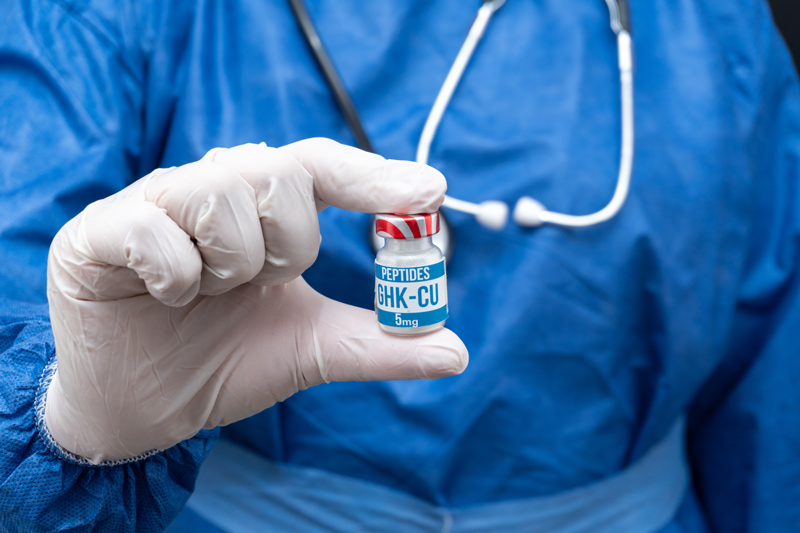
Others are used or studied for sexual health, such as PT-141/bremelanotide. Others, such as GHK-Cu, are used topically in skin applications.

askpharmacist_1200
Research and prescribing

Research into peptides is active and evolving. Not every peptide promoted online has been adequately studied, and not every peptide discussed on social media or sold for "research use" is authorized for use in a compounded prescription. Whether a particular peptide is appropriate for you is a decision for you and your prescriber, based on your health history, other medications, and treatment goals.

compounding_vials_tray

Which peptides can a compounding pharmacy legally prepare?

A licensed pharmacy cannot simply compound any peptide a patient requests. For a 503A pharmacy to compound a medication from a bulk drug substance, the substance generally must meet at least one of three federal criteria: it must comply with an applicable USP or National Formulary monograph if one exists; if no such monograph exists, it must be a component of an FDA-approved drug; or it must appear on FDA's 503A Bulk Drug Substances List. Other requirements apply as well, including prescription, quality, sourcing, and state-law requirements.

That is why a legitimate pharmacy may decline to prepare many peptides marketed online. The fact that a substance is discussed in research, promoted by a wellness business, or sold on the internet does not mean it may be compounded for human use.

If you have questions about whether a specific peptide can be prepared for you, a licensed compounding pharmacist can walk you through what is and is not permitted. A few peptides may be available through a licensed compounding pharmacy today:

Tesamorelin

Tesamorelin is associated with an FDA-approved drug product marketed as Egrifta. Whether a compounded preparation is appropriate or lawful depends on the prescription, formulation, source ingredients, and applicable federal and state requirements.

Sermorelin

Sermorelin is commonly prepared by compounding pharmacies pursuant to prescription and has been recognized by FDA as eligible for evaluation/use in 503A compounding under FDA's interim bulks framework.

PT-141

PT-141/bremelanotide is associated with an FDA-approved drug product marketed as Vyleesi and may be compounded only when the applicable legal requirements are met.

GHK-Cu

GHK-Cu appears on FDA's current interim 503A bulks list for non-injectable routes of administration. Injectable GHK-Cu is a different question and should not be assumed lawful.

What is changing with peptide rules

Peptide compounding rules are in the middle of a formal FDA review, and the picture is still evolving.

Status as of August 20, 2026


Because this is moving quickly, this page notes the date its status was last reviewed. Confirm the current status with a licensed compounding pharmacy before making any decisions.

Where things stand
April 2026

In April 2026, FDA removed several peptide bulk drug substances from Category 2, the category FDA uses for nominated substances it has identified as presenting significant safety risks. Removal from Category 2 is not the same thing as authorization to compound. It simply means the substance is no longer in that restricted category and may be evaluated through FDA's 503A bulks-list process.

July 23-24, 2026

On July 23 – 24, 2026, FDA's Pharmacy Compounding Advisory Committee reviewed seven peptide-related bulk drug substances for possible inclusion on the 503A Bulk Drug Substances List. The committee recommended six for inclusion: BPC-157-related substances, KPV-related substances, TB-500-related substances, MOTS-c-related substances, Semax-related substances, and Epitalon-related substances. The committee did not recommend emideltide, also known as delta sleep-inducing peptide or DSIP.

What happens next

A committee recommendation is advisory. FDA still must decide whether and how to proceed, including through formal rulemaking, before those substances could be added to the 503A Bulk Drug Substances List. Until FDA acts, those six peptides are not yet authorized for 503A compounding, and a licensed pharmacy generally may not compound them from bulk drug substance for human use.

That distinction matters: some peptides may be lawful to compound today, but the current FDA discussion is mostly about a different group of peptides that is not lawful yet. Additional substances are expected to be reviewed before February 2027.

Legitimate compounded peptides and the "research peptide" gray market

There is a clear line between a compounded peptide and the peptides sold across a large online gray market. Products labeled "research use only" or "not for human consumption" are not prepared, checked, prescribed, or dispensed the way a prescription medication is.

A compounded peptide is prepared by a licensed pharmacy, for a named patient, under a prescription, and subject to quality standards and regulatory oversight. That difference is the reason to work with a licensed prescriber and pharmacy rather than sourcing peptides on your own.

peptide_molecular_gray

Side effects and what to discuss with your prescriber

Like any medication, peptides can have side effects, and what is right for one person may not be right for another. Your prescriber and pharmacist can help you weigh your health history, other medications, potential risks, and goals. Bring your questions to that conversation, and follow the guidance your prescriber gives you rather than dosing information found online.

Cost and insurance


The cost of compounded peptide therapy varies by substance, formulation, dose, and pharmacy. Compounded medications are often not covered by insurance, though your situation may differ. A compounding pharmacy can give you a clear price and explain your options before you begin.

How to start with a prescriber


Peptide therapy starts with a licensed provider who can determine whether it is appropriate for you. If you are interested, talk with your prescriber, or request a consultation to learn more. To find a compounding pharmacy near you, use our pharmacy locator.

This page is for educational purposes only and is not medical advice. Compounded medications are not FDA-approved, and availability may vary based on applicable regulations. Eligibility for compounded peptide therapy is determined by a licensed prescriber based on individual clinical need.
Explore peptide therapy

Explore peptides and their potential uses

Body composition
Tesamorelin
Sexual health
PT-141
Healthy aging
Sermorelin
Weight management
Peptides for Weight Loss
Skin & Hair
GHK-Cu
Safety & regulation
Are Peptides Safe & Legal?
Peptides 101
What Are Peptides?
Recovery & mobility
Peptides for Joint Pain & Recovery
Frequently Asked Questions

Common questions about compounded peptide therapy

Peptide therapy is the use of a prescribed peptide, a short chain of amino acids, under the direction of a licensed provider. When compounded, it is prepared by a licensed pharmacy for an individual patient pursuant to a prescription and within the limits of the law.

Find a Compounding Pharmacy Near You